Building Belonging in London Schools
As part of their prevention work to tackle school suspension and absenteeism to support children and young people to remain in school and safe, London’s Violence Reduction Unit (VRU) developed London’s Inclusion Charter.
To inform this charter, VRU appointed us to undertake an ambitious piece of research to better understand the drivers of educational inclusion and belonging in London schools. The study engaged with over 3400 students across each of the 32 London boroughs as well as their parents and educators, asking what really matters to help students feel a sense of belonging and safety at school?
Article: The Connected Belonging Questionnaire (CBQ) as a Youth Voice Measure: Operationalizing an Intersectional Lens to Engage Young People
School belonging shapes young people’s outcomes, yet marginalized groups often feel less connected. This research introduces Connected Belonging and a validated survey tool to help educators understand diverse experiences, including those at risk of becoming NEET. Grounded in youth voice, it supports more inclusive, responsive approaches to wellbeing, engagement, and education systems.
Accessing Optimism: Rethinking Wellbeing, Inclusion, and Belonging for Young People in Britain Who Are Not in Education, Employment, or Training (NEET)
For decades, UK policy has focused on raising aspirations to improve social mobility, rooted in neoliberal meritocracy. This paper challenges that view, proposing ‘hopeful optimism’ as a more realistic, relational alternative. Grounded in Connected Belonging research, it reframes success beyond economic terms, supporting young people to thrive, imagine possibilities, and resist fear of failure.
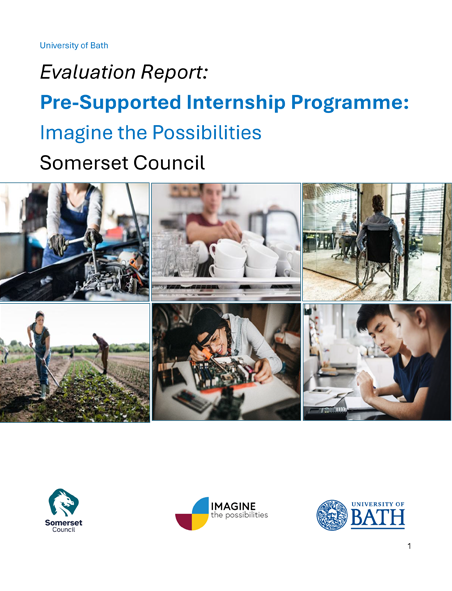
Evaluation Report: Pre-Supported Internship Programme: Imagine the Possibilities, Somerset Council
This report outlines how Somerset Council’s Imagine the Possibilities Team embedded Connected Belonging and Tackling NEET Toolkit approaches within the support model for this supported employment programme. This programme supported 50 young people whose post-16 progression options were severely limited due to settings rejecting them on the basis of being unable to meet need. Each learner had an EHCP and faced complex barriers to engagement. Using survey and interview data, the evaluation presents the impacts on young people’s progression through a lens of Connected Belonging. Case studies bring to life the experiences of four young people.

Resilience Through Belonging: Schools’ Role in Promoting the Mental Health and Well-Being of Children and Young People.
After almost a decade of the policy promotion of resilience-building initiatives in schools, mental health figures have not improved. This paper argues that a broader consideration of resilience, that acknowledges the importance of collective and relational approaches, could enhance school well-being support. It draws on data collected from online survey responses from almost 2000 secondary-aged students and subsequent focus groups with 76 students across London.
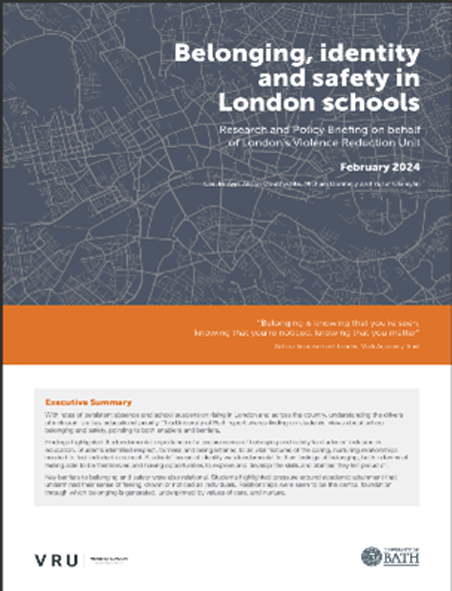
Belonging, Identity and Safety in London Schools.
This February 2024 report contains headline findings on students’ views about school belonging and safety. It also points to key enablers and barriers for supporting school belonging.

London’s Inclusion Charter
Developed by London’s Violence Reduction Unit in partnership with young people, schools, parents and carers, local authorities and education specialists, through research and discussion, London’s Inclusion Charter promotes and invests in inclusive practices. It highlights four principles underpinning effective inclusion. These were informed by VRU Research, carried out by the University of Bath, which captured the views of nearly 4000 school children, parents and staff across London.
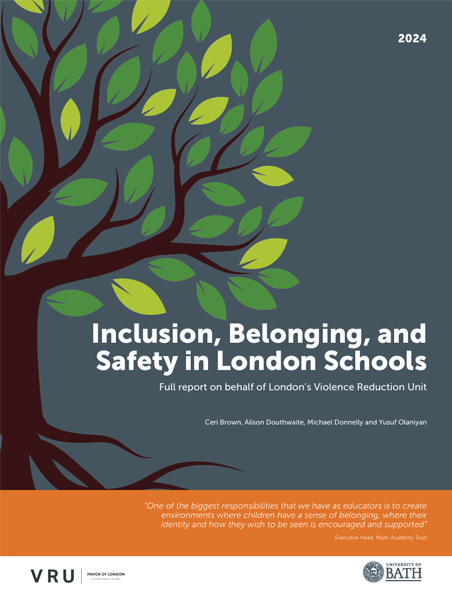
Inclusion, Belonging and Safety in London’s Schools
This report expands on the headline report, Belonging, Identity and Safety in London Schools. It details the research findings and explores what these tell us about the principles and values that should underpin actions to improve school inclusion across London.